
What Is Bitcoin and Why It Still Matters in a Multi-Chain Wallet
Bitcoin remains the entry point for many crypto users — but today BTC is managed alongside Ethereum, Solana, stablecoins, and other assets in a multi-chain wallet experience.
8 min read
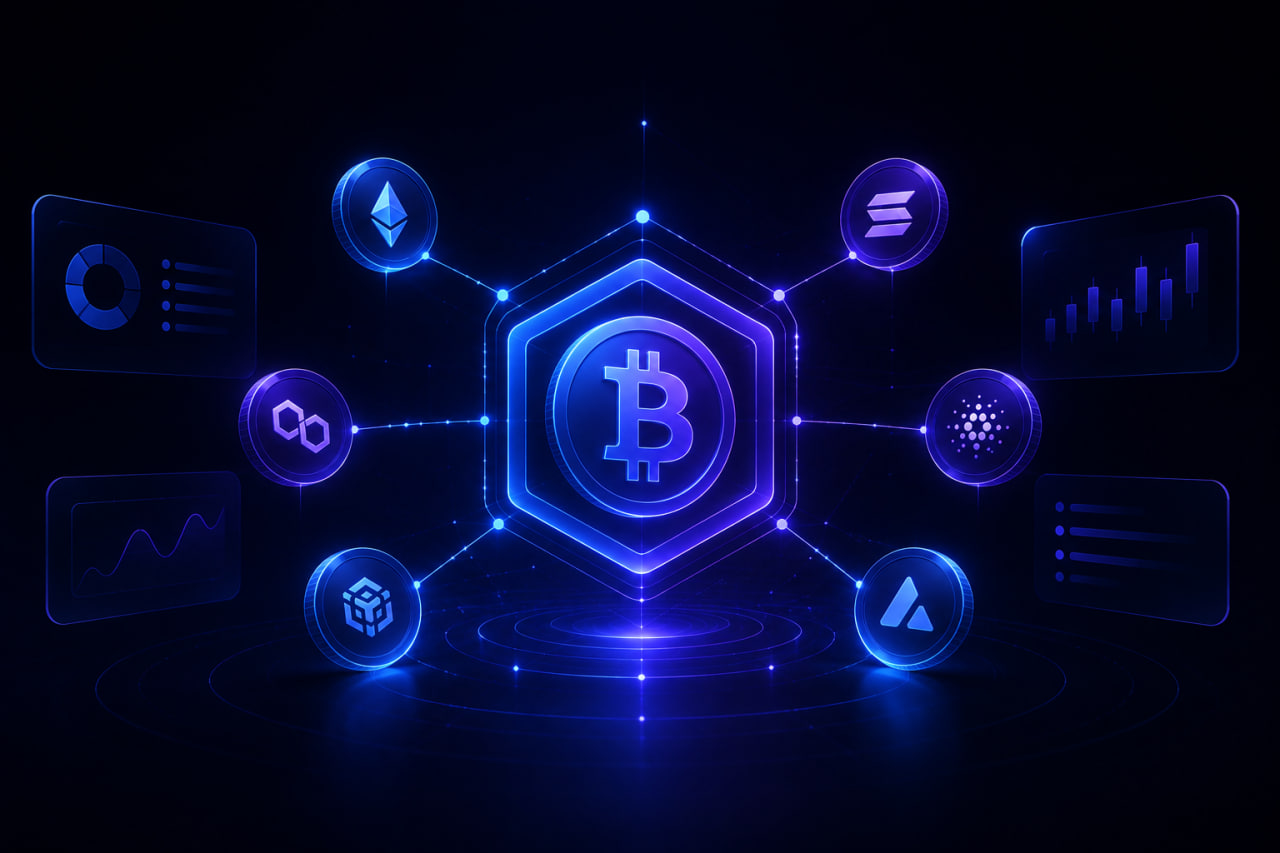
Bitcoin is still the asset most people think of first when they hear the word crypto. It introduced the idea of digital money that does not depend on a central bank, a payment company, or a traditional financial institution to exist.
But Bitcoin is no longer used in isolation. Today, many users hold BTC alongside Ethereum, Solana, stablecoins, BNB Chain assets, TON, and other digital assets. That change has made the wallet experience more important than ever.
A user may start with Bitcoin, but very quickly they need to understand balances, networks, swaps, wallet security, supported assets, and how different parts of their portfolio fit together. This is where the idea of a modern multi-chain wallet becomes important.
Key Takeaways
- Bitcoin remains one of the most recognized and important digital assets in crypto.
- Many users now manage Bitcoin alongside Ethereum, Solana, stablecoins, and other blockchain assets.
- A multi-chain wallet helps users keep better visibility across different networks and assets.
- Wallet security is still essential for Bitcoin users because digital asset control depends on careful transaction review and safe recovery habits.
- Ethlas Pro focuses on a calmer multi-chain wallet experience built around usability, asset visibility, crypto swaps, and security-focused digital asset management.
Why Bitcoin Still Matters
Bitcoin remains important because it represents the first widely recognized form of decentralized digital value. For many users, it is the entry point into crypto and the asset they trust most when thinking about long-term digital ownership.
Unlike tokens that are mainly used inside specific applications, Bitcoin has a broader role. People use it as a store of value, a portfolio asset, a payment asset in some situations, and a reference point for the entire crypto market.
Even when users become active across other networks, Bitcoin often remains part of the foundation of their crypto holdings. That is why wallet products still need to treat BTC as more than just another asset on a list.
Bitcoin Is Simple in Concept, but Wallet Use Can Still Feel Complex
The idea behind Bitcoin is easy to understand: users hold BTC and can send or receive it through the Bitcoin network. In practice, however, managing Bitcoin can still create friction.
A user has to think about wallet access, recovery, network fees, transaction confirmations, address accuracy, and the difference between holding BTC and moving BTC. If that same user also manages Ethereum, stablecoins, Solana, and other assets, the experience can become even more fragmented.
This is why wallet design matters. A strong wallet should not only store assets. It should help users understand what they are holding, where those assets live, and what action they are about to approve.
The Shift From Single-Asset Wallets to Multi-Asset Management
Early crypto usage was often simple. A person might hold Bitcoin in one wallet and check the balance from time to time. Today, that is no longer how many people use crypto.
Modern users often manage several types of assets:
- Bitcoin for long-term holding
- Ethereum for smart contract activity
- Stablecoins for transfers and payments
- Solana or BNB Chain assets for faster or lower-cost activity
- Other tokens for ecosystem access, trading, or portfolio exposure
When assets are spread across different tools, the user loses context. They may need one app for BTC, another app for EVM assets, another interface for swaps, and another page to check supported networks.
A clearer wallet experience helps reduce that friction. Instead of forcing users to jump between disconnected surfaces, a product can bring asset visibility and wallet actions closer together.
Why Supported Assets Matter for Bitcoin Users
Bitcoin users often care about one simple question: can I manage BTC safely and clearly in this wallet?
But in a multi-chain environment, the question becomes broader. Users also want to know what other assets are supported, what actions are available, and whether the wallet gives enough context before they move funds.
That is why the supported networks and assets page matters. It gives users a clearer view of which assets are visible in the Ethlas Pro wallet experience and reminds them that deposit, withdrawal, tracking, and swap availability can vary by asset, network, and product status.
For Bitcoin specifically, this kind of clarity is useful because BTC often sits at the center of a larger portfolio. Users may hold Bitcoin, but they may also need to understand how BTC fits beside ETH, USDT, SOL, and other supported assets.
Bitcoin and Crypto Swaps
Bitcoin is often held long term, but many users still need flexibility. Sometimes they want to rebalance, move into a stablecoin, adjust exposure, or manage a portfolio across several assets.
That is where wallet-based swap flows become relevant.
A crypto swap is not the same thing as sending Bitcoin to another address. A swap changes one supported asset into another supported asset through an available wallet or exchange flow. Before confirming any swap, users should review the asset, network, amount, fees, price impact, and approval details.
For users who want to understand how this fits into Ethlas Pro, the Crypto Swaps page explains how swap flows work inside a wallet context and why users should review every confirmation carefully.
Bitcoin may be the starting asset, but the broader user need is simple: people want a smoother way to manage decisions across their portfolio without losing control or context.
Security Is Still the Core of Bitcoin Management
Bitcoin ownership depends on control. If a user loses access, signs the wrong transaction, uses the wrong address, or mishandles recovery information, the result can be serious.
That is why wallet security is not only a technical feature. It is also a product experience. A secure wallet should help users slow down, read what they are approving, and understand the action before committing.
For Bitcoin holders, strong habits matter:
- Confirm the full receiving address before sending BTC.
- Keep recovery information private and offline.
- Avoid unknown prompts and suspicious links.
- Review fees and transaction details before approval.
- Use official wallet flows instead of random third-party pages.
Ethlas Pro’s Wallet Security page gives broader context around safer wallet habits, approvals, recovery responsibility, and how users can think about control when managing digital assets.
Why Bitcoin Belongs in a Multi-Chain Wallet Experience
Bitcoin still matters because it remains one of the most recognized and widely used digital assets. But the way people manage Bitcoin has changed.
Users no longer think only in terms of one coin and one wallet. They think in terms of portfolios, supported assets, swaps, stablecoins, multiple chains, and secure wallet actions. They need visibility, not clutter. They need flexibility, not confusion.
A multi-chain wallet experience helps Bitcoin fit into that broader reality. It allows BTC to remain central while still giving users a clearer way to manage the rest of their digital assets.
How Ethlas Pro Approaches the Bitcoin Wallet Experience
Ethlas Pro is designed around the idea that crypto should feel powerful without becoming chaotic. The product focuses on multi-chain asset visibility, wallet usability, security-focused design, and clearer everyday wallet actions.
For Bitcoin users, this means BTC is not treated as an isolated asset. It becomes part of a broader wallet experience where users can view supported assets, follow balances, understand available actions, and move through crypto tasks with more context.
Users who want to understand the product vision can read more on the About Ethlas Pro page, which explains how Ethlas Pro approaches multi-chain usability, wallet clarity, supported assets, and practical digital asset management.
FAQ
What is Bitcoin?
Bitcoin is a decentralized digital asset that allows users to hold and transfer value without relying on a traditional bank or central financial institution. It is one of the most recognized assets in the crypto market and often serves as the starting point for many digital asset users.
Can Bitcoin be managed in a multi-chain wallet?
Yes. A multi-chain wallet experience can help users manage Bitcoin alongside other digital assets such as Ethereum, Solana, stablecoins, and supported tokens from other blockchain ecosystems. The goal is to give users better visibility across their broader crypto portfolio.
Why does wallet security matter for Bitcoin?
Wallet security matters because Bitcoin ownership depends on access control, transaction review, address accuracy, and safe recovery habits. Users should always confirm transaction details, protect recovery information, and avoid suspicious links or unknown wallet prompts.
How does Ethlas Pro help Bitcoin users?
Ethlas Pro helps Bitcoin users by placing BTC inside a clearer multi-chain wallet experience. Instead of treating Bitcoin as an isolated asset, Ethlas Pro focuses on asset visibility, supported networks, wallet usability, crypto swaps, and security-focused digital asset management.
Can users swap Bitcoin in a crypto wallet?
Wallet-based swap availability depends on the asset, network, liquidity, and product support. Before making any swap, users should review the asset, network, amount, fees, price impact, and confirmation details. Ethlas Pro provides crypto swap context through its wallet experience and related product pages.
Final Thoughts
Bitcoin remains one of the most important assets in crypto. But the user experience around Bitcoin now exists inside a much larger multi-chain world.
The next generation of wallet products will not win only by listing more assets. They will win by making those assets easier to understand, safer to manage, and more practical to use in everyday crypto activity.
For users who want to manage Bitcoin alongside Ethereum, Solana, stablecoins, and other digital assets, Ethlas Pro offers a clearer multi-chain wallet experience built around usability, asset visibility, crypto swaps, and security-focused design.
That is why Bitcoin still matters in a multi-chain wallet. It is not only the original crypto asset. It is also the foundation many users build around as they move into a broader digital asset experience.